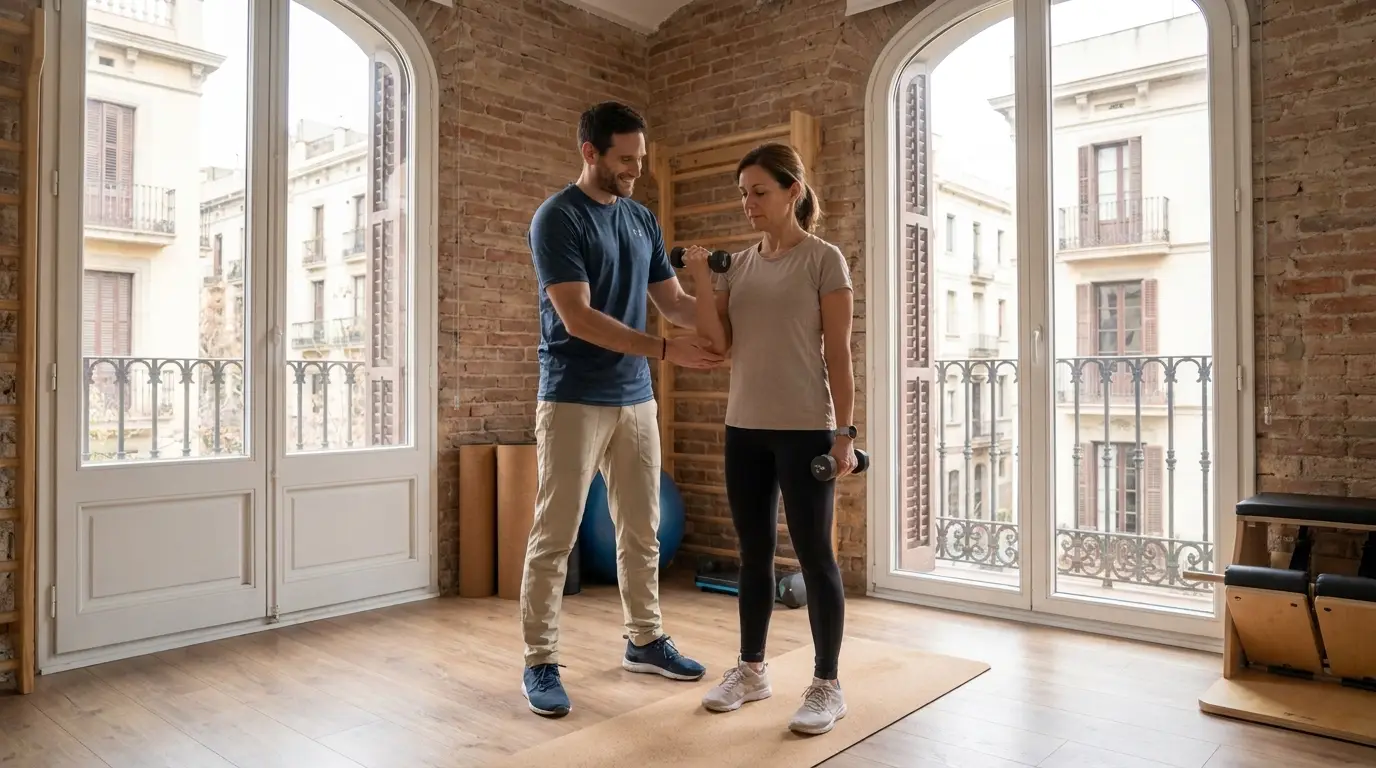
Ever wondered how therapists figure out which muscles you’re actually using during rehabilitation? Most of the time, surface electromyography (sEMG) is the quiet tool making that possible. This smart tech reads muscle signals right from your skin, no needles, just small sensors, and it’s handy whether you’re recovering from an injury, dealing with a long-term condition, or fine-tuning workouts for better results.
You get instant feedback on how your muscles activate, so specialists can adjust your plan right away. That means less guesswork and more focused progress, like knowing exactly which muscle to work on after surgery or how to tweak training for a specific goal.
Understanding Surface Electromyography in Rehabilitation
Surface electromyography is a simple, non-invasive way to record the tiny electrical signals your muscles give off when they contract. Small sensors sit directly on your skin, usually right over the muscle being checked, whether that’s your forearm, calf, or another spot, and they pick up those signals before sending them to a computer or compatible device for review. These sensors are often lightweight adhesive pads with a conductive surface, built to detect even faint signals from individual muscle fibers. Once the readings are collected, they appear as clear graphs or numbers you can easily understand without needing advanced training. This lets therapists see exactly when a muscle turns on, how much effort it’s using, and whether it’s working the way it should during everyday movements in rehabilitation sessions.
Surface EMG provides clinicians with a non-invasive window into muscle activation patterns, which is invaluable for tailoring rehabilitation programs to individual needs.
Although sEMG has been a research tool for many years, newer tech has made it portable enough for regular use. Wireless sensors, small units, and app-based tools mean you can have sessions in a clinic or right at your own table, often with far fewer cables than you’d expect. Some setups save your data automatically, while others send results straight to your therapist’s screen, allowing them to adjust your plan instantly. This is especially helpful if going to a treatment center often isn’t realistic.
| Application | Benefit | Example |
|---|---|---|
| Stroke rehab | Tracks recovery progress | Measures arm muscle activation |
| Sports injury recovery | Identifies weak points | Monitors knee stability |
| Strength training | Optimizes performance | Improves squat form |
With accurate feedback, therapists can quickly spot the muscle activity that matters most, making sure each exercise truly helps your recovery progress.
Why sEMG is Transforming Rehabilitation
Rehabilitation can be tough, often the hardest part is knowing if the muscles you’re supposed to activate are actually doing their job. With sEMG, that guesswork fades quickly. It lets you and your therapist see muscle activity live on a screen, as it’s happening. You can spot exactly which muscles are working and which are slacking, making it easier to tweak your movement right then and there. This kind of instant feedback often turns practice into real progress, breaking big hurdles into smaller steps so new motions feel less overwhelming.
Integrating sEMG biofeedback into therapy allows patients to see and understand their own muscle activity, which can accelerate motor learning and recovery.
Take a rotator cuff recovery session: sEMG shows whether the right shoulder muscles are doing the lifting, helping prevent subtle compensations, like your neck muscles stepping in, that can slow healing. Research in the Journal of Orthopaedic & Sports Physical Therapy found that people using sEMG biofeedback regained functional strength about 20% faster than those depending only on a therapist’s visual check. That’s a noticeable boost.
Dr. Ioannis Strimpakos points to sEMG as a trusted tool for certain muscle and joint injuries, spotting small muscle weaknesses that often remain after standard rehabilitation. This means fewer delays and more accurate tracking. In neuro rehab, it’s proving especially helpful for conditions like cerebral palsy, where fine-tuning muscle control can improve everyday movement.
How sEMG Works in Real Life Rehabilitation Programs
Picture recovering from an ankle sprain. Your therapist places small sEMG sensors on the muscles around your ankle, they look like tiny stickers with thin wires, and are much less intimidating than they sound. As you go through rehabilitation exercises, a screen shows which muscles are working and how much effort they’re using. If certain muscles, maybe the ones along the outer calf, aren’t pulling their weight, your therapist can tweak your routine right away. This means you don’t have to wait days to find out if the exercises are helping, your recovery is adjusted based on your body’s live performance.
In sports rehabilitation, this can be really helpful. Athletes sometimes feel ready before their muscles are truly back to full strength. sEMG can check if the body has actually reached normal power levels, lowering the risk of setbacks. This is especially useful for moments like a soccer player’s hamstring check right before a big game, the kind of test that can stop injuries and protect careers.
Wireless systems make it even better. A therapist can track your muscle activity from hundreds of miles away and coach you through exercises over a video call, great for travelers or anyone far from good rehabilitation centers.
Pair sEMG with interactive rehab games, and therapy feels like a fun challenge. You’re moving through virtual worlds, watching your muscles work live, and rehabilitation becomes something you actually want to beat.
Benefits Beyond Injury Rehabilitation
sEMG isn’t just for getting back on track after an injury, though it often works really well for that. Many fitness fans use it to fine‑tune their workouts, seeing exactly which muscles are doing most of the work. You might find your quads are taking over during squats when your glutes should be helping, a mismatch that’s more common than you’d think. Changing your stance or making small tweaks to your form can quickly bring things back into balance, and that balance means less chance of strain.
In wellness programs for older adults, sEMG can help them switch on the right muscles for everyday tasks like climbing stairs or carrying grocery bags. That builds strength and, just as important, confidence, which often cuts down the risk of slips and falls. One study showed seniors who did balance training with sEMG feedback scored about 30% higher on stability tests compared to those without it.
Bodybuilders appreciate how precise it is for focusing on growth areas. Competitive athletes use it to fix muscle imbalances before they hurt performance. And in occupational therapy, it’s a popular tool for people in physically tough jobs, spotting inefficient movements so they can train supportive muscles and avoid nagging overuse injuries.
Latest Trends in sEMG for Rehabilitation
Wireless sEMG sensors have made a big jump forward, making it much easier for therapists to keep track of patients whether they’re at home, in the clinic, or even away on holiday (yes, some people stick with rehabilitation while travelling). With telehealth now in the mix, feedback can be sent right away, often cutting out the need for in‑person visits. This is especially useful for anyone living far from specialist care. In many setups, sEMG data goes straight to secure cloud dashboards, where experts can check progress, tweak exercises, and adjust recovery plans without long waits.
In stroke rehabilitation, sEMG is often used to watch how motor skills improve week by week. It can guide neuromuscular re‑training so therapy changes as strength and control return. Some systems pair sEMG with functional electrical stimulation (FES). Here’s how: when sensors pick up very low muscle activity, the device sends a gentle pulse to encourage those slower muscle fibres, usually softer than people expect. This creates live feedback that adapts instantly.
Bionic reconstruction programs use sEMG to help patients relearn muscle signals for prosthetic control. For people with severe nerve damage, this can bring back abilities they thought were gone. New prosthetics now respond to tiny sEMG signals, allowing smoother, more natural actions, like turning a page or lifting a cup without that stiff, mechanical feel.
AI is also stepping in, spotting small muscle changes that humans might miss, then shaping rehabilitation plans around those details. That’s where tech often proves most useful, focusing on what the patient really needs.
btw, we wrote about sports recovery here: Sports Rehab After Shoulder Stabilisation for Athletes.
Additionally, you might be interested in our guide on Rehabilitation Guidelines for Lateral Ankle Sprain.
Practical Tips for Using sEMG in Rehabilitation
Thinking about adding sEMG to your rehabilitation or workouts? When used well, it can be really helpful, and help you avoid mistakes that often slow progress.
- Work with a trained professional: Sensor placement needs accuracy, not guesswork. It’s best to put them directly over the muscle you want to monitor, like your quads for leg strength or biceps for arm work. Even a small misplacement can give misleading readings, which can throw off your tracking or recovery plan.
- Keep measurements steady: A good approach is to set regular check-ins. Random readings rarely give a full view, while consistent use shows clear trends in muscle activity. Skip too many sessions and you might miss gradual gains in strength or coordination.
- Mix it with other rehabilitation tools: Combine sEMG with manual therapy, resistance bands, mobility exercises, or balance training. This mix often gives a deeper look at recovery progress.
- Review your data in different ways: Patterns might pop up in a graph or app view that you didn’t notice before, and that can boost motivation.
Used with care, sEMG can make rehabilitation more interactive, easier to follow, and more engaging.
For more strategies, check out Rehabilitation with Exercise: Effective Sports Recovery Guide.
Your Path Forward with sEMG in Rehabilitation
Surface electromyography, sEMG if you prefer the short version, is a smart, research-supported tool for both recovery and training. Think of it like a peek at what your muscles are doing in the moment. You can check if your workout is hitting the right spots, like making sure your quads are working instead of your calves, and in many cases, it can help speed up healing. Guessing about muscle activity often wastes time and energy, so having clear numbers is a real advantage. With sEMG, you and your therapist can shape a rehabilitation plan that’s more precise and better suited to your personal goals.
Whether you’re recovering from a sprained knee, chasing a quicker 5K, or just aiming to get the most out of each rep, sEMG can help. One runner from a local club used it to spot small imbalances in leg muscles, fixed them, and ended up running more smoothly, using energy more efficiently, and having fewer aches after races all season.
Thinking about adding it to your routine? Talk with your physical therapist or trainer about mixing sEMG into your rehabilitation plan. Pair it with steady training habits and follow expert advice, the tech works best when you put in the effort. When smart tools, skilled guidance, and consistent work come together, progress often happens faster and with less risk.