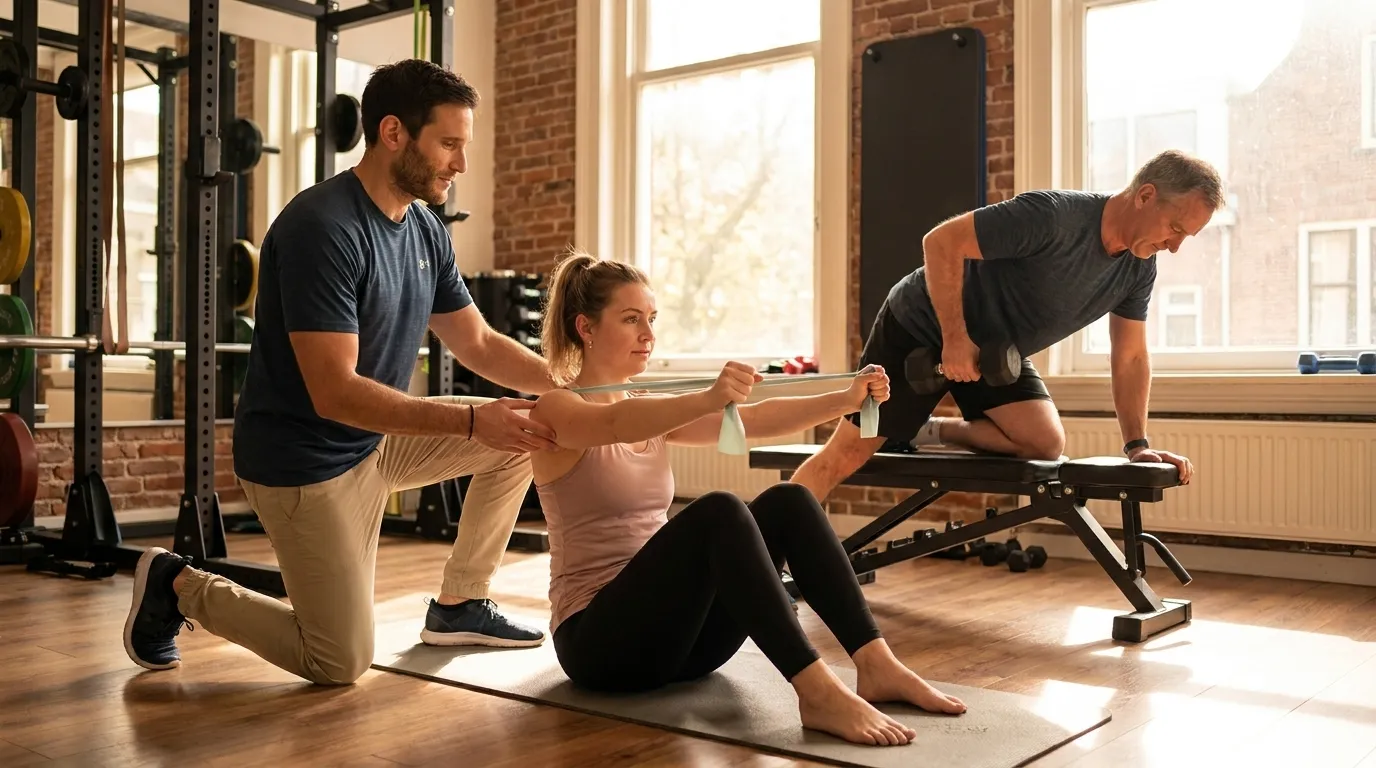
Recovering from a shoulder stabilisation or labral repair, such as an arthroscopic Bankart procedure, can feel daunting — especially if you’re an active tennis player, padel enthusiast, or regular at the gym. Sports rehab for shoulder injuries disrupts more than just your sport; it impacts your daily function, confidence, and overall wellness. The good news? With the right sports rehab approach, most athletes return to their sport stronger than before.
In this guide, we’ll explore evidence-based sports rehab strategies tailored for sports enthusiasts aged 20–50, covering everything from early recovery to advanced sport-specific training. We’ll also integrate recent research, expert insights, and actionable tips to help you or your clients achieve optimal outcomes.
Rehabilitation after a Bankart repair is no longer a one-size-fits-all approach. For tennis and padel players, we emphasize rotational stability, proprioception, and kinetic chain integration to prevent recurrence.
Understanding Sports Rehab for Shoulder Stabilisation and Bankart Repair
A Bankart repair addresses damage to the labrum — the cartilage ring that stabilizes the shoulder joint. Arthroscopic stabilisation involves minimally invasive techniques to reattach or tighten torn tissue, reducing instability. For athletes, especially in overhead sports, this repair is crucial for restoring full performance.
Recent studies in 2025 show that 82.3% of athletes return to competitive sports after Bankart repair, with 9.2% experiencing recurrent instability. Overhead athletes (tennis, padel) often require 10–12 months for full return, while non-overhead athletes can progress faster. The nature of the sport heavily influences recovery timelines; for instance, repetitive explosive movements in tennis serves place much greater stress on the repaired tissue than controlled gym-based exercises. Understanding the specific biomechanical demands of your sport helps in tailoring sports rehab to prevent overload and reinjury.
| Procedure | RTS Rate | Recurrence |
|---|---|---|
| Bankart Repair | 82.3% | 9.2% |
| Latarjet Procedure | >93% | ~3% |
As shown above, while both procedures have high success rates, Latarjet repairs tend to have lower recurrence. However, Bankart remains a preferred choice for many due to its minimally invasive nature and preservation of anatomy. Athletes often choose it because it allows for a more natural shoulder movement post-recovery, which is vital for sports requiring fine motor control and precision.
Phase-Based Sports Rehab Overview
Early Sports Rehab Phase (0–6 weeks)
In the initial phase, the focus is on protecting the repair. Sling immobilisation is common, with passive range of motion (ROM) exercises introduced under physiotherapist supervision. Isometric rotator cuff activation and gentle scapular retraction drills are initiated. Attention to posture, breathing mechanics, and gentle mobility of surrounding joints (such as the neck and thoracic spine) can enhance circulation and aid healing. Nutrition also plays a role — adequate protein and micronutrients support tissue repair.
For tennis and padel players, this phase is about maintaining lower-body and core strength to prevent overall deconditioning. For gym-goers, avoiding any upper-body loading is essential. Light cardio, such as stationary cycling, can be incorporated to maintain cardiovascular fitness without stressing the shoulder.
Mid Sports Rehab Phase (6–12 weeks)
This phase introduces controlled strengthening, targeting scapular stabilisers and rotator cuff endurance. Proprioceptive drills — such as closed-chain weight shifts — help restore joint awareness. Resistance is gradually increased using bands or light weights, with careful monitoring for compensatory movements.
Return-to-play protocols should be sport-specific. Athletes in racquet sports need targeted scapular control and eccentric loading drills before resuming competition.
In addition, mid-phase rehab may include aquatic therapy for low-impact resistance and manual therapy to address soft tissue restrictions. Athletes are encouraged to track progress using measurable milestones like pain-free range of motion angles and strength symmetry between shoulders.
Sport-Specific Sports Rehab Considerations
Tennis & Padel Sports Rehab
From month three onward, players begin progressive plyometric drills, resistance band rotations, and eventually, on-court simulations. Serving and smashing return last, once full strength and stability are achieved. Coaches may use video analysis to assess technique changes post-recovery, ensuring mechanics do not place undue stress on the repaired shoulder. Drills often start with slower, controlled swings before progressing to full-speed rallies.
Weightlifters Sports Rehab Guidance
Post-stabilisation, weightlifters must avoid heavy overhead lifts until at least five months. The emphasis is on scapular control, rotator cuff conditioning, and eccentric lowering before reintroducing Olympic lifts. Gradual load progression is key — starting with machines or guided bars before free weights — to ensure movement patterns are precise and safe.
Athletes should also consider alternative lifts, such as landmine presses, during transition periods to maintain strength without excessive strain.
| Activity | Reintroduction Timeline | Focus |
|---|---|---|
| Tennis Serve | 9–12 months | Rotational stability |
| Overhead Press | 5–6 months | Scapular control |
| Padel Smash | 9–12 months | Proprioception |
Integrating Technology in Sports Rehab
Modern sports rehab programs leverage wearable sensors to monitor asymmetry and range of motion. AI-driven motion analysis can highlight subtle deficits, enabling targeted interventions. Virtual reality drills are emerging to retrain neuromuscular patterns in a safe, controlled environment. For example, VR tennis simulations allow players to practice swing mechanics without actual ball impact, reducing load while reinforcing motor patterns.
Tele-rehabilitation platforms also enable athletes to receive real-time feedback from therapists remotely, increasing accessibility and adherence. Studies show that integrating such technologies can improve compliance rates by up to 30%, which directly correlates with better long-term outcomes. For more tech-driven recovery ideas, see Harnessing Fitness Tracking.
Common Sports Rehab Mistakes to Avoid
- Rushing the timeline: Returning to overhead sports too soon increases recurrence risk.
- Neglecting scapular stabilisation: This can compromise shoulder mechanics and lead to reinjury.
- Ignoring psychological readiness: Mental confidence is a significant predictor of successful return-to-sport.
Another frequent error is failing to maintain conditioning in the rest of the body during recovery. An athlete who loses core stability or leg strength may place extra stress on the shoulder during sport-specific movements. Skipping regular check-ins with a physiotherapist can also lead to unnoticed compensations or imbalances that hinder progress. For a broader perspective on recovery, check out Rehabilitation with Exercise: A Guide to Sports Recovery.
Advanced Sports Rehab Strategies for Wellness Integration
Rehab shouldn’t stop at the shoulder. Full kinetic chain conditioning — involving hips, core, and legs — supports shoulder performance. Functional training classes, yoga, and mobility work can complement formal rehab. Incorporating mindfulness practices can also help athletes manage pain perception and anxiety about reinjury.
Personalised programs blend strength training with injury prevention, ensuring each athlete’s plan matches their sport and lifestyle. Nutrition coaching, sleep optimisation, and stress management techniques are integrated, recognising that recovery is influenced by the body’s overall wellness. This holistic approach reduces the likelihood of setbacks and promotes sustainable performance gains.
Tools and Resources for Sports Rehab
- Functional Movement Screening (FMS) to assess readiness.
- Resistance bands and stability balls for home exercises.
- Sports psychology sessions to boost confidence.
Athletes may also benefit from tracking apps that log exercise compliance, pain levels, and recovery metrics, providing both the patient and therapist with actionable data. Cold therapy units, compression sleeves, and mobility sticks can be valuable adjuncts for managing soreness and maintaining range of motion during later phases.
| Tool | Purpose | Best For |
|---|---|---|
| FMS | Assess movement patterns | All athletes |
| Resistance Bands | Strength & stability | Rehab at home |
| Sports Psychology | Confidence building | Competitive athletes |
Sports Rehab Conclusion
Sports rehab after shoulder stabilisation or Bankart repair is a journey that demands patience, precision, and sport-specific planning. Whether you’re swinging a tennis racket, smashing a padel ball, or lifting at the gym, following structured phases and integrating modern tools can set you up for a safe, strong return.
Remember — most athletes (80–95%) return successfully when they respect the process. Partnering with professionals who understand both the science and the sport can make all the difference. The most successful recoveries balance progressive physical training with mental resilience, lifestyle adjustments, and consistent professional guidance.
Your future performance depends on the quality of your present recovery — so make every phase count.
External References: