Lateral ankle sprains are one of the most common injuries in sports and active lifestyles, often occurring during activities that involve rapid changes in direction, jumping, or uneven surfaces. For athletes, fitness enthusiasts, and even casual exercisers, understanding how to effectively approach rehabilitation after this injury is crucial. This ensures not only restored function but also prevention of chronic ankle instability that can limit future performance and wellness.
These guidelines outline a structured rehabilitation process informed by the latest evidence, blending physiotherapy principles with strength training, proprioceptive work, and sport-specific conditioning to get you back to peak fitness safely.
Understanding the Injury and Rehabilitation Timelines
A lateral ankle sprain typically involves damage to the anterior talofibular ligament (ATFL) and sometimes the calcaneofibular ligament (CFL). Severity is classified into three grades:
- Grade I: Mild ligament stretch, minimal swelling, no instability. Recovery: 1, 2 weeks.
- Grade II: Partial tear, moderate swelling and bruising, mild instability. Recovery: 3, 6 weeks.
- Grade III: Complete tear, severe swelling/bruising, marked instability, possible surgical intervention. Recovery: 8, 12 weeks.
Early mobilization combined with targeted neuromuscular training is the cornerstone of preventing chronic ankle instability after a lateral ankle sprain.
Acute Phase Rehabilitation: Protect, Reduce Swelling, Maintain Mobility
The acute phase (0, 4 days) is all about controlling inflammation and initiating gentle movement. Following the principle that ‘REST IS NOT REHAB,’ the focus is on early mobilization within pain-free ranges. This approach helps reduce secondary complications such as joint stiffness, muscle atrophy, and poor circulation.
Key steps:
- Apply cryotherapy, compression, and elevation to manage swelling, ideally in 6-8 hours intervals several times a day.
- Use protective devices (bracing, taping) to prevent further injury, especially during daily activities.
- Begin isometric activation of surrounding muscles to maintain strength, such as gentle contractions of the peroneals and calf muscles.
- Avoid complete immobilization, gentle, pain-free range of motion helps maintain joint nutrition and prevent stiffness.
Athletes may also benefit from gentle ankle alphabet exercises, where the foot traces letters in the air, promoting mobility in multiple planes. Early guided movement within tolerance can accelerate transition to the next phase.
Sub-Acute Rehabilitation Phase: Restore ROM and Begin Strengthening
From day 4 to around week 3, the goal is to restore mobility and start rebuilding strength. Mild discomfort (≤4/10 pain scale) is acceptable, but sharp pain should be avoided. This stage bridges the gap between protection and more active rehabilitation, laying the foundation for dynamic stability.
Progressions include:
- Moving from isometric to concentric and eccentric strengthening, targeting ankle plantarflexors, dorsiflexors, inversors, and eversors.
- Stretching the ankle gently to restore dorsiflexion and plantarflexion, which is critical for normal walking and running mechanics.
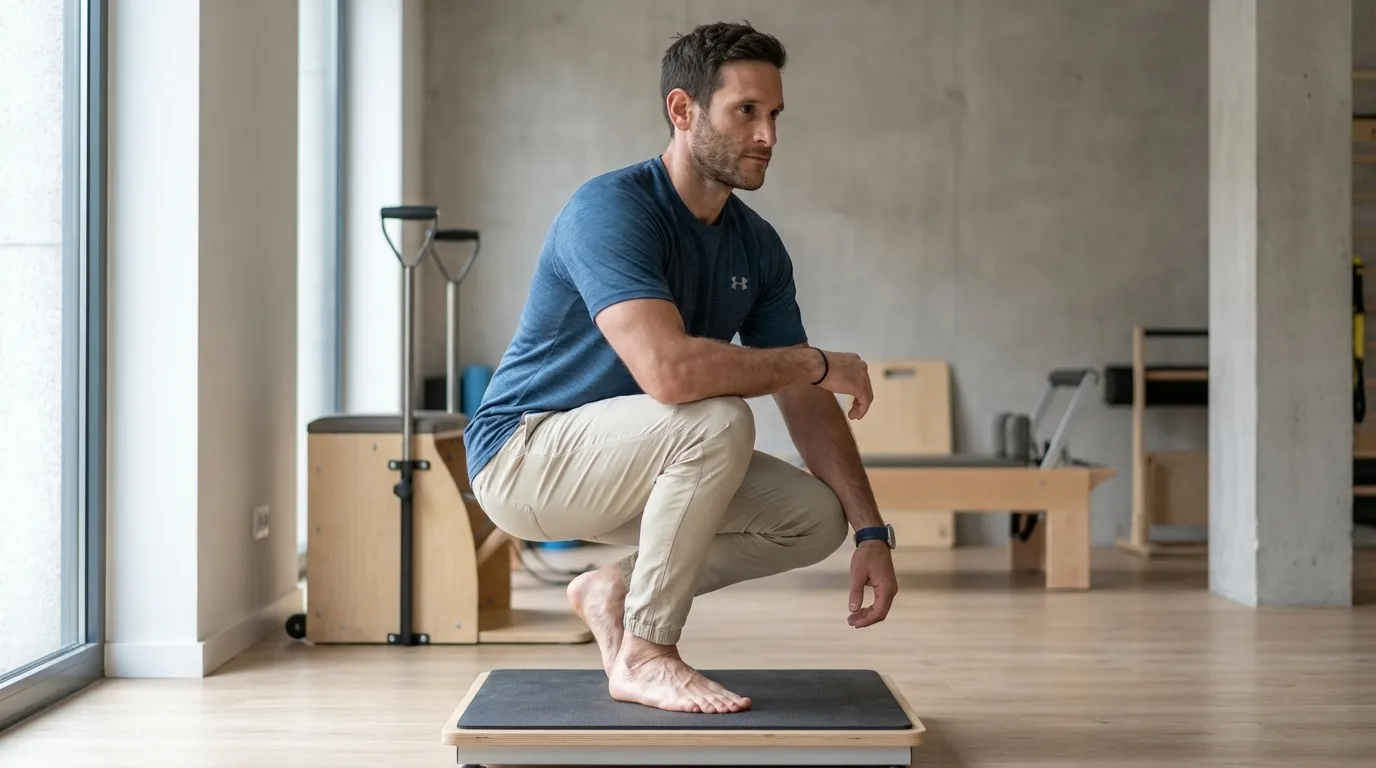
- Introducing proprioceptive exercises like single-leg stance or balance boards to retrain the neuromuscular system.
According to Dr. Carolyn Emery, incorporating balance and proprioception exercises can reduce the risk of recurrent ankle sprains in athletes by up to 50%. Examples include standing on a foam pad with eyes closed or catching a ball while balancing. These drills challenge the body’s ability to stabilize, improving reaction time and joint awareness, which is crucial for athletes returning to unpredictable environments.
For additional strengthening strategies, explore our functional training benefits for strength and mobility.
Intermediate and Advanced Rehabilitation Phase: Dynamic Stability and Sport-Specific Work
Weeks 3, 12 focus on preparing the ankle for the demands of sport or high-level fitness activities. By now, mobility and baseline strength should be restored, allowing progression to more challenging drills that replicate real-world stresses.
Training elements:
- Plyometric exercises (box jumps, lateral hops) to build reactive strength and enhance muscle-tendon unit efficiency.
- Agility drills that mimic sport movements (cone drills, ladder work) to restore coordination and directional control.
- High-intensity balance and neuromuscular control exercises in multiple planes, such as single-leg hops onto unstable surfaces.
This phase is also where wearable technology, such as smart insoles, can be integrated to monitor load distribution and balance metrics, ensuring safe progression. Coaches and therapists may use video analysis to identify compensations, such as reduced push-off power or altered landing mechanics, and correct them before full return to sport.
For athletes returning to structured programs, combining rehab with Strength and Conditioning Programs in Barcelona can provide the necessary power and stability to perform at peak levels. Emphasis on sport-specific conditioning at this stage reduces the gap between rehab and competition.
Return-to-Sport Rehabilitation Phase: Functional Testing and Psychological Readiness
Before returning to full competition or high-intensity training, functional criteria must be met:
- Pain-free full range of motion.
- Strength symmetry between both legs, ideally within 90, 95% of the uninjured side.
- Successful completion of hop tests, Y-balance, and other functional measures without compensation.
Functional testing is not just physical, it includes psychological readiness, ensuring the athlete has confidence in their ankle’s stability. Fear of re-injury can alter movement patterns and performance. Incorporating visualization, graded exposure to sport drills, and confidence-building exercises can help overcome mental barriers.
This is a shift from traditional time-based rehab toward criteria-based clearance, which research shows leads to better long-term outcomes. Integrating injury prevention programs during this phase is crucial. Evidence shows that ongoing proprioceptive and strengthening routines can reduce recurrence rates significantly, with some studies reporting up to a 60% reduction in re-injury risk among compliant athletes.
Long-Term Prevention and Wellness Integration
Even after full recovery, the ankle remains at increased risk due to residual proprioceptive deficits and ligament laxity. Preventive strategies should be embedded into regular fitness routines:
- Continuing balance and proprioceptive work, such as wobble board training or single-leg dynamic drills.
- Maintaining calf and peroneal muscle strength through progressive resistance exercises.
- Using supportive footwear and taping during high-risk activities like trail running or contact sports.
For those seeking a holistic approach, combining ongoing rehab with Physiotherapy in Sports: Recovery, Performance & Prevention can help maintain both performance and wellness over the long term. Integrating mobility work, strength training, and recovery strategies such as soft tissue therapy and flexibility routines ensures the ankle remains resilient. Regular check-ins with a physiotherapist can help identify early signs of overload before they escalate into injury.
Your Rehabilitation Path Forward
Recovering from a lateral ankle sprain is not just about healing, it’s about building a stronger, more resilient foundation for future performance. By following these evidence-based rehabilitation guidelines, you can progress through each phase safely, address underlying weaknesses, and integrate preventive strategies into your training.
Action steps:
- Start rehab immediately, focusing on mobility and protection.
- Progress to strengthening and proprioception as pain allows, using measurable milestones to guide advancement.
- Advance to sport-specific drills only after meeting functional milestones, ensuring both physical and psychological readiness.
- Maintain preventive work long after returning to full activity to protect against recurrence.
With the right plan, you not only recover, you come back stronger, more stable, and better prepared for the demands of your sport or fitness lifestyle. Think of this rehabilitation process not as a temporary fix, but as an investment in your long-term athletic capacity and injury resilience. The dedication you put in now will pay dividends in performance and confidence for years to come.
For more guidance on sports recovery strategies, see our rehabilitation with exercise guide.