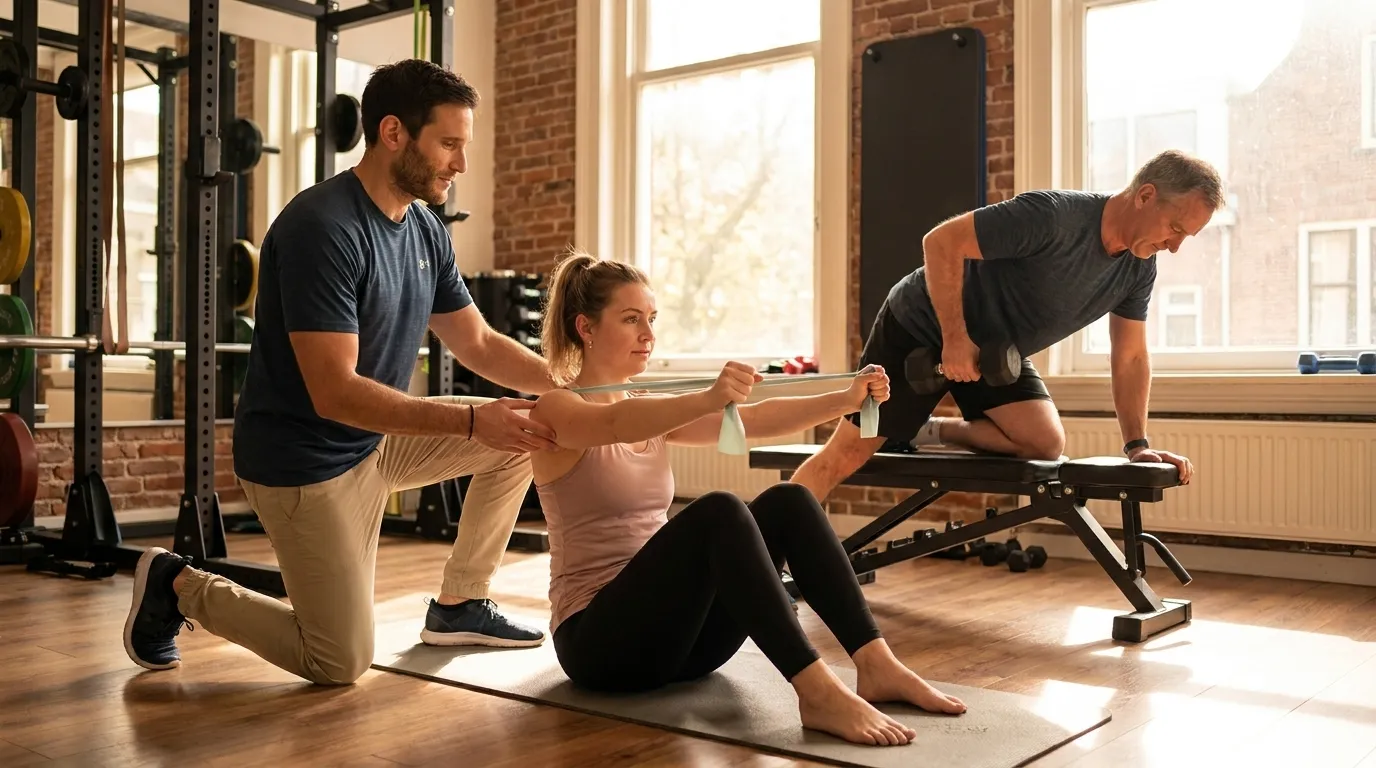
Introduction
Functional training has emerged as one of the most effective approaches to building a body that not only looks fit but also performs optimally in everyday life. Unlike traditional weightlifting that often isolates muscles, functional training emphasizes movements that improve both strength and mobility in real-world scenarios. Whether you are a fitness enthusiast seeking advanced techniques, recovering from an injury, or simply aiming to enhance your overall health, functional training offers numerous benefits.
By integrating functional training benefits into your routine, you can enhance coordination, balance, and flexibility while reducing the risk of injury. In this article, we will explore the key concepts behind functional training, the science supporting it, and how you can apply daily strength exercises and mobility workouts to achieve your goals. We’ll also cover real-life examples, expert tips, and common mistakes to avoid.
If you don’t move well, you won’t move often. Functional training is about restoring the quality of your movement.
— Gray Cook
Understanding Functional Training Benefits
Functional training focuses on exercises that mimic natural movement patterns, such as squatting, lifting, pushing, pulling, and twisting. These movements engage multiple muscle groups and joints, promoting both strength and mobility. According to the American Council on Exercise, functional training can improve posture, enhance athletic performance, and aid in daily activities like carrying groceries or climbing stairs.
Key benefits include:
- Improved coordination: Engaging stabilizing muscles enhances overall movement efficiency.
- Increased strength: Multi-joint exercises boost functional strength applicable to real-life tasks.
- Enhanced mobility: Stretching and dynamic movements improve joint range of motion.
- Injury prevention: Balanced muscle development reduces strain on joints and ligaments.
| Benefit | Description | Impact |
|---|---|---|
| Coordination | Better muscle synergy | High |
| Strength | Real-life applicable power | High |
| Mobility | Greater joint flexibility | Medium |
| Injury Prevention | Lower risk of strains | High |
As seen above, functional training offers a holistic approach that targets multiple aspects of fitness simultaneously.
Core Principles of Daily Strength Exercises
Daily strength exercises form the backbone of a functional training routine. Unlike bodybuilding, where the goal might be muscle isolation, functional strength training uses compound movements to engage multiple muscle groups. Examples include kettlebell swings, deadlifts, and push presses.
When planning your daily strength exercises, consider:
- Movement patterns: Focus on squat, hinge, push, pull, lunge, and rotation.
- Progressive overload: Gradually increase resistance or intensity.
- Form over load: Proper technique reduces injury risk.
One of the most effective ways to integrate daily strength exercises is to alternate between upper and lower body movements, ensuring balanced development. For example, pair squats with overhead presses, or deadlifts with pull-ups. This approach not only saves time but also improves cardiovascular endurance.
Designing Effective Mobility Workouts
Mobility workouts are essential for maintaining joint health and ensuring that your strength gains translate into functional movement. Mobility differs from flexibility; while flexibility is about muscle length, mobility encompasses the ability of joints to move freely through their range of motion.
Popular mobility drills include:
- Hip circles
- Thoracic spine rotations
- Ankle dorsiflexion stretches
- World’s greatest stretch
Incorporating mobility workouts into your routine can also accelerate recovery from injuries. For instance, a person recovering from a knee injury may benefit from controlled range-of-motion exercises combined with low-impact strength training.
All human beings should be able to perform basic maintenance on themselves. Mobility work is the foundation of athletic longevity.
— Kelly Starrett
By dedicating just 10-15 minutes daily to mobility, you can significantly improve performance in both strength training and daily activities.
Functional Training for Injury Recovery
Functional training is especially valuable for those recovering from injuries. The emphasis on controlled, multi-joint movements can restore muscle balance and joint stability. Rehabilitation programs often include exercises like resistance band pulls, step-ups, and modified planks.
For example, athletes recovering from shoulder injuries often perform scapular retraction exercises combined with light pressing movements to rebuild stability and strength.
| Exercise | Injury Focus | Benefit |
|---|---|---|
| Resistance Band Pull | Shoulder | Stability |
| Step-Up | Knee | Strength |
| Modified Plank | Core/Back | Support |
By tailoring exercises to individual needs, functional training can bridge the gap between rehabilitation and a return to full activity.
Advanced Functional Training Techniques
Once you have mastered the basics, you can explore advanced techniques to further enhance your performance. Examples include:
- Unilateral training: Performing movements on one side to improve balance and correct asymmetries.
- Plyometric drills: Jump training to increase power output.
- Loaded carries: Walking with weights to strengthen grip, core, and posture.
These advanced methods are particularly beneficial for athletes and experienced lifters who want to push their limits while maintaining functional movement quality.
Implementing Functional Training in Your Routine
To effectively integrate functional training, follow these steps:
- Assess your current fitness level.
- Identify your goals: Strength, mobility, rehabilitation, or performance.
- Select appropriate exercises: Mix strength and mobility work.
- Schedule sessions: 3-5 days per week for optimal results.
- Track progress: Adjust intensity and volume as you improve.
A sample week might include two full-body strength sessions, two mobility-focused sessions, and one recovery day with light activity such as walking or yoga.
By planning strategically, you ensure steady progress without overtraining.
Conclusion
Functional training offers a powerful, adaptable approach to building strength and mobility for all fitness levels. By focusing on natural movement patterns, you not only enhance your performance in the gym but also in everyday life. Whether you are rehabilitating an injury, seeking to improve athletic performance, or simply aiming for a healthier lifestyle, functional training provides the tools you need.
Incorporating daily strength exercises and mobility workouts will help you achieve balanced development, reduce injury risk, and maintain long-term health. Start with the basics, progress gradually, and remember that quality of movement is more important than the amount of weight lifted.
With consistent effort and smart programming, you can unlock the full potential of functional training to improve your strength, mobility, and overall well-being.